
Nuxt Realtime 0.2 is out. Here's what's new since the last release.
Rooms
useRealtimeRoom ties state, events, presence, and locks together under one room id, with server-side lifecycle hooks and a single auth checkpoint instead of gating every handler individually.
<script setup lang="ts">
const room = useRealtimeRoom('document:123')

const doc = room.state('content', '')
const { members } = room.presence({ info: { name: 'Alice' } })
const { claim, release, ownedByMe } = room.lock('editing')
</script>
See the rooms docs for details.
Locking
useRealtimeLock claims exclusive ownership of a key across all connected clients, so only one user edits a record or drags a card at a time.
<script setup lang="ts">
const { claim, release, ownedByMe, locked } = useRealtimeLock('document:123')
</script>
useRealtimeLockRoom pairs with it for a bulk, read-only view of every lock tagged with a room, without subscribing to each key individually.
See the locking docs for details.
Presence
useRealtimePresence tracks which clients are currently present in a room, with optional info about each one (a name, avatar, cursor position). Useful for "who's viewing this page" indicators and avatar stacks.
<script setup lang="ts">
const { members, join, leave } = useRealtimePresence('document:123', {
  info: { name: 'Alice', avatarUrl: '/alice.png' },
})
</script>
See the presence docs for details.
Realtime DevTools
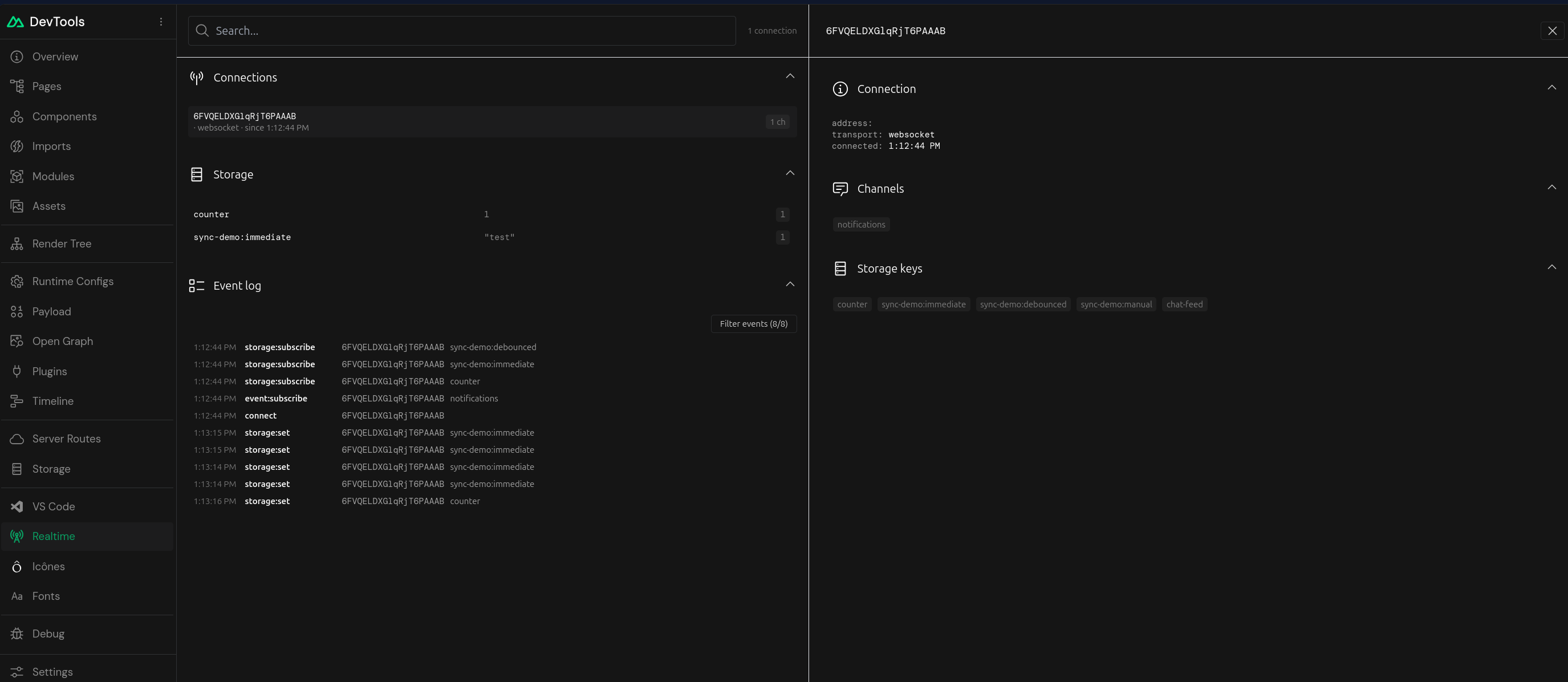
A "Realtime" tab in Nuxt DevTools shows what's happening on the wire while you develop: active connections, subscribed channels and storage keys per socket, live storage values, and a scrolling event log. It's dev-only and never ships in production.
See the DevTools docs for details.
Connection authentication
A new nuxt-realtime:io Nitro hook exposes the Socket.IO Server before any connections are accepted, so you can register io.use() middleware to authenticate or authorize clients — JWT, session cookies, or anything else. A matching nuxt-realtime:auth app hook lets the client attach a fresh token on every connection attempt, including reconnects.
See the Authentication docs for details.
Redis Cluster support
The Redis driver now accepts a cluster option, so reactiveRedisDriver() can talk to a Redis Cluster instead of a single node:
import { reactiveRedisDriver } from 'nuxt-realtime/drivers/redis'

export default defineNuxtConfig({
  nuxtRealtime: {
    storage: reactiveRedisDriver({
      cluster: [{ host: 'redis-1', port: 6379 }, { host: 'redis-2', port: 6379 }],
    }),
  },
})
See the configuration docs for details.
Configurable Socket.IO path
socketio.path lets you move the Socket.IO endpoint off the /socket.io default (useful behind a reverse proxy that already owns that path). The client and server now derive the same path from this single option.
Fixes
- Client-supplied storage keys can no longer read or write the internal
_lease:namespace used for storage expiry.